
ถุงใต้ตาคืออะไร
What are under-eye bags?
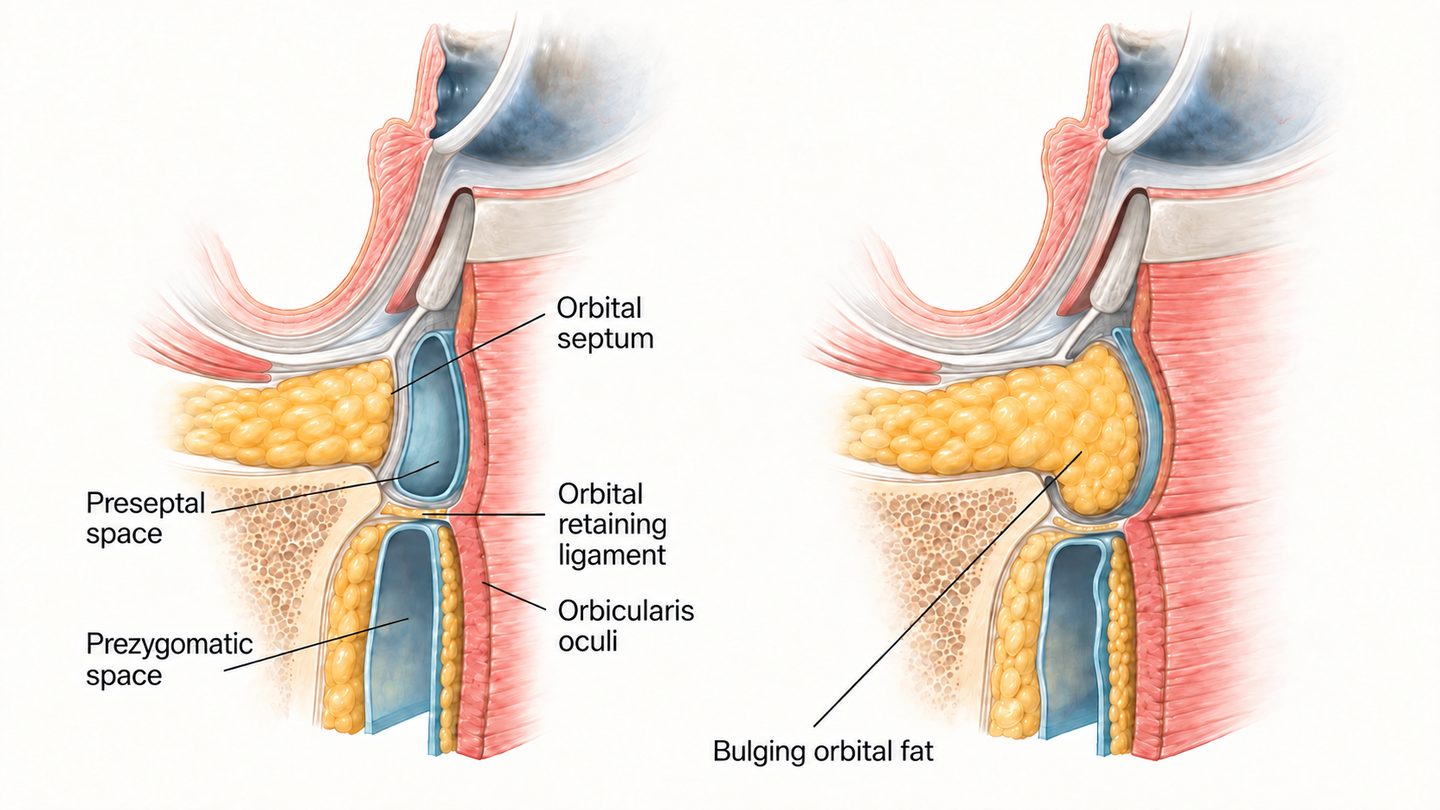
ใต้เบ้าตาของเรามีไขมันรองรับลูกตาอยู่ตามธรรมชาติ โดยมีเยื่อบาง ๆ ที่เรียกว่าผนังกั้นเบ้าตา (orbital septum) ทำหน้าที่ยึดไขมันก้อนนี้ไว้ให้อยู่กับที่
Beneath each eye sits a natural pad of fat that cushions the eyeball. A thin membrane called the orbital septum normally holds that fat in place.
เมื่ออายุมากขึ้น เยื่อและเนื้อเยื่อรอบ ๆ จะหย่อนลง ไขมันที่เคยถูกยึดไว้จึงเคลื่อนออกมาด้านหน้า กลายเป็นก้อนนูนที่เรามองเห็นเป็น “ถุงใต้ตา” ขณะเดียวกันบริเวณรอยต่อระหว่างเปลือกตากับแก้มอาจยุบลงเป็นร่อง เรียกว่าร่องน้ำตา (tear trough) เงาที่เกิดจากร่องนี้ทำให้ถุงใต้ตาดูชัดขึ้นกว่าความเป็นจริง
With age that membrane and the surrounding tissue loosen, so the fat drifts forward and appears as a bulge, the classic "eye bag". At the same time the junction between eyelid and cheek can hollow into a groove called the tear trough. The shadow it casts makes the bag look considerably worse than it is.
สาเหตุที่พบบ่อย
Common causes
ถุงใต้ตาไม่ได้เกิดจากสาเหตุเดียว และการแยกให้ออกว่าเป็นแบบใดสำคัญมาก เพราะวิธีแก้ไขต่างกันโดยสิ้นเชิง
Under-eye bags do not have a single cause, and telling them apart matters, because the treatments are entirely different.
- ไขมันเคลื่อนออกมาด้านหน้า — เป็นสาเหตุหลักของถุงใต้ตาแบบถาวร มักชัดขึ้นตามอายุ และบางคนมีลักษณะทางพันธุกรรมที่ทำให้เห็นตั้งแต่อายุยังน้อย
- ร่องน้ำตาลึก — ตัวถุงอาจไม่ใหญ่ แต่ร่องด้านล่างที่ลึกทำให้เกิดเงา จึงดูเหมือนถุงใหญ่กว่าที่เป็น
- ผิวหนังและกล้ามเนื้อหย่อน — ผิวใต้ตาบางที่สุดในร่างกาย เมื่อความยืดหยุ่นลดลงจึงเห็นความไม่เรียบได้ง่าย
- อาการบวมชั่วคราว — การนอนไม่พอ กินเค็ม ภูมิแพ้ และการสูบบุหรี่ ทำให้เกิดการคั่งของน้ำ ลักษณะนี้มักเป็น ๆ หาย ๆ และดีขึ้นเองเมื่อปรับพฤติกรรม
- Fat that has drifted forward — the main cause of a permanent bag. It becomes more visible with age, though some people inherit the trait and notice it young.
- A deep tear trough — the bag itself may be modest, but the hollow beneath casts a shadow that makes it read as much larger.
- Lax skin and muscle — the skin under the eye is the thinnest on the body, so any loss of elasticity shows readily.
- Temporary fluid retention — poor sleep, salty food, allergies and smoking all cause puffiness. This type comes and goes, and improves on its own once the habit changes.
ข้อสังเกตง่าย ๆ ถ้าถุงใต้ตาเปลี่ยนแปลงไปตามการนอนหรืออาหารในแต่ละวัน มักเป็นเรื่องของการบวมคั่งน้ำ
แต่ถ้าเห็นเท่าเดิมทุกวันไม่ว่าจะนอนมากแค่ไหน มักเป็นเรื่องโครงสร้างของไขมันและเนื้อเยื่อ ซึ่งการปรับพฤติกรรมอย่างเดียวจะไม่ทำให้หายไป
A simple test — if the bags change from day to day with your sleep or diet, it is usually fluid.
If they look identical every morning no matter how much you sleep, the cause is structural, and lifestyle changes alone will not remove them.
แนวทางแก้ไข
Treatment options
วิธีที่เหมาะสมขึ้นอยู่กับว่าสาเหตุหลักคืออะไร ปริมาณไขมัน ความลึกของร่องน้ำตา และสภาพผิวของแต่ละคน
The right approach depends on the dominant cause: how much fat is involved, how deep the tear trough is, and the condition of the skin.
1. ปรับพฤติกรรมและดูแลเบื้องต้น
1. Lifestyle and basic care
เหมาะกับกลุ่มที่เป็นการบวมชั่วคราว การนอนให้เพียงพอ ลดอาหารรสเค็ม รักษาภูมิแพ้ที่เป็นอยู่ และหลีกเลี่ยงการขยี้ตา ช่วยลดอาการได้จริงในหลายราย
Suited to fluid-related puffiness. Adequate sleep, less salt, treating any underlying allergy and not rubbing the eyes genuinely help in many cases.
2. ฉีดสารเติมเต็มหรือเติมไขมันบริเวณร่องน้ำตา
2. Filler or fat grafting to the tear trough
ในรายที่ถุงไม่ใหญ่มากแต่ร่องน้ำตาลึก การเติมร่องให้ตื้นขึ้นช่วยลดเงาและทำให้รอยต่อระหว่างเปลือกตากับแก้มดูเรียบขึ้น ทำได้สองแนวทาง
When the bag is modest but the trough is deep, filling the groove softens the shadow and smooths the transition from lid to cheek. There are two routes.
- สารเติมเต็มกลุ่มไฮยาลูรอนิกแอซิด — ทำได้ทันที ไม่ต้องผ่าตัด แต่ผลลัพธ์อยู่ชั่วคราวและต้องทำซ้ำเป็นระยะ
- การเติมไขมันของตัวเอง (fat grafting) — ใช้ไขมันจากบริเวณอื่นของร่างกายมาเติม ผลลัพธ์อยู่ได้นานกว่า แต่เป็นหัตถการที่ต้องเตรียมตัวมากกว่า และปริมาณไขมันที่คงอยู่ในระยะยาวแตกต่างกันในแต่ละคน
- Hyaluronic acid filler — immediate and non-surgical, but temporary and needs repeating.
- Fat grafting — uses your own fat from elsewhere. Longer-lasting, but a bigger procedure, and how much of the graft survives long term varies between individuals.
ข้อจำกัดที่ควรเข้าใจคือ ทั้งสองวิธีไม่ได้เอาถุงไขมันออก แต่ลดความชัดของเงาที่ทำให้ถุงดูเด่น หากมีไขมันปูดชัดเจนอยู่แล้ว การเติมร่องเพียงอย่างเดียวอาจทำให้ใต้ตาดูบวมขึ้นได้
The limitation to understand: neither removes the fat pad. They reduce the shadow that makes it prominent. If there is already an obvious bulge, filling the groove alone can make the area look puffier.
3. ผ่าตัดแก้ไขถุงใต้ตา
3. Lower eyelid surgery
เป็นการแก้ที่ต้นเหตุเชิงโครงสร้าง โดยจัดการกับไขมันที่เคลื่อนออกมา แนวทางในปัจจุบันไม่ได้เน้นการตัดไขมันทิ้งอย่างเดียว แต่ให้ความสำคัญกับการย้ายไขมันไปเติมร่องน้ำตา เพื่อให้รอยต่อระหว่างเปลือกตากับแก้มดูต่อเนื่องเป็นธรรมชาติ
This addresses the structural cause directly. Current practice does not simply cut fat away; it favours repositioning the fat into the tear trough, so the lid-to-cheek transition stays continuous and natural.
เหตุผลคือ หากตัดไขมันออกมากเกินไปโดยไม่คำนึงถึงร่องด้านล่าง อาจทำให้ใต้ตาดูลึกโบ๋และดูโทรมกว่าเดิมได้ในระยะยาว
The reason is that removing too much fat without addressing the hollow below can leave the eye looking sunken and, over time, older rather than fresher.
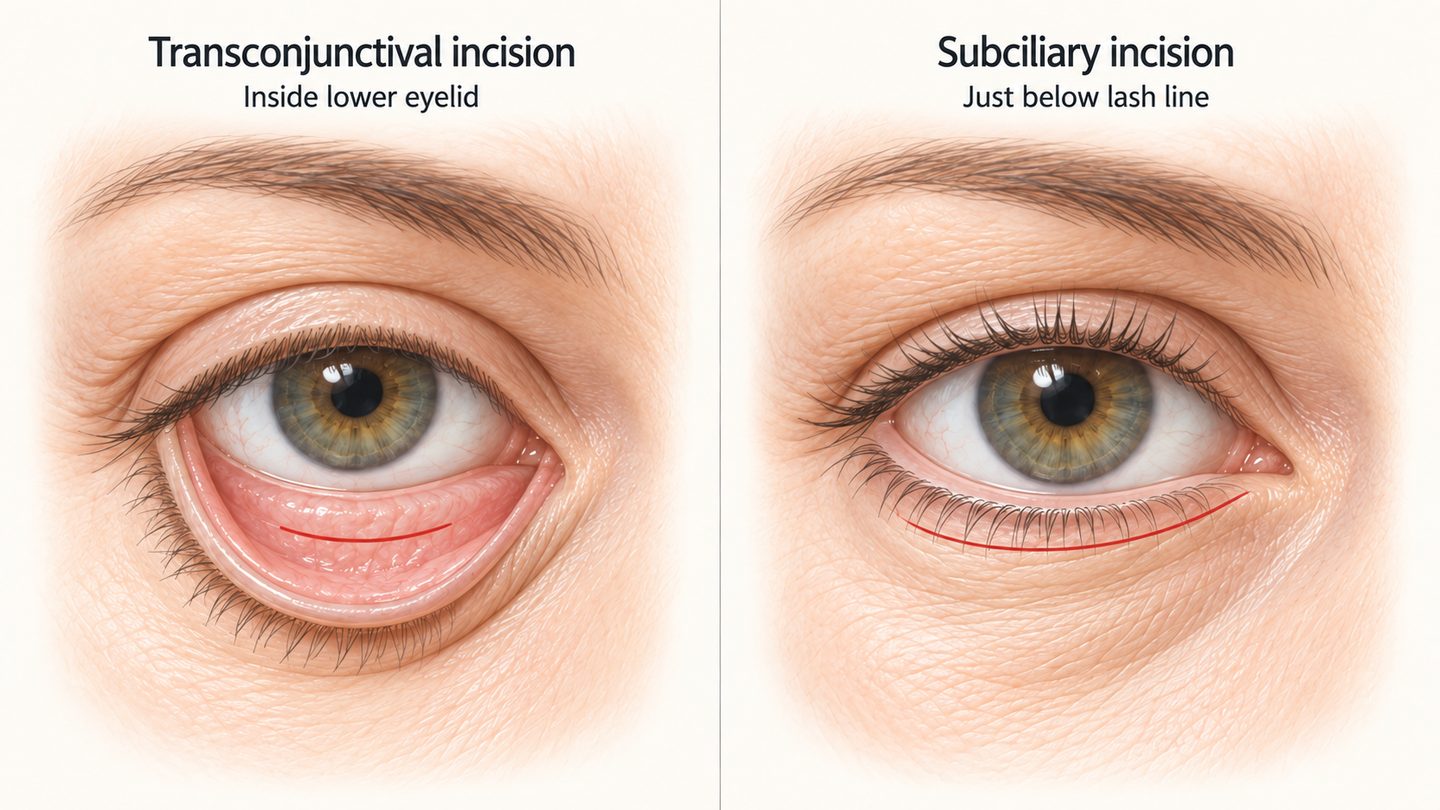
- ลงแผลด้านในเปลือกตา — เหมาะกับผู้ที่ผิวยังไม่หย่อนมาก ไม่มีแผลเป็นให้เห็นจากภายนอก
- ลงแผลใต้ขนตา — ใช้เมื่อจำเป็นต้องจัดการผิวหนังส่วนเกินหรือกล้ามเนื้อร่วมด้วย
- Incision inside the eyelid — suits patients whose skin is still firm. No externally visible scar.
- Incision just below the lash line — used when excess skin or muscle also needs addressing.
สิ่งที่ควรถามแพทย์ก่อนตัดสินใจ
Questions worth asking before you decide
- ถุงใต้ตาของเราเกิดจากไขมัน ร่องน้ำตา ผิวหย่อน หรือหลายอย่างรวมกัน
- จำเป็นต้องผ่าตัดหรือไม่ หรือมีทางเลือกที่ไม่ต้องผ่าตัดที่ได้ผลพอกัน
- หากผ่าตัด จะย้ายไขมันหรือตัดออก และเพราะเหตุใดจึงเลือกวิธีนั้น
- ต้องพักฟื้นนานเท่าไร มีอาการบวมช้ำประมาณกี่วัน
- ความเสี่ยงและภาวะแทรกซ้อนที่อาจเกิดขึ้นมีอะไรบ้าง
- Is my problem fat, the tear trough, lax skin, or a combination?
- Do I actually need surgery, or is there a non-surgical option that would work as well?
- If we operate, will the fat be repositioned or removed, and why that choice?
- How long is recovery, and how many days of bruising and swelling should I expect?
- What are the risks and possible complications?
คำถามสุดท้ายสำคัญที่สุด แพทย์ที่ตอบเรื่องความเสี่ยงอย่างตรงไปตรงมาคือสัญญาณที่ดี
The last question matters most. A surgeon who discusses risk openly is a good sign.
ปรึกษาแพทย์เฉพาะทางConsult a specialist
ทุกแผนการรักษาเริ่มต้นจากการตรวจประเมินโดยศัลยแพทย์ตกแต่ง เพื่อออกแบบวิธีที่เหมาะกับลักษณะเฉพาะของแต่ละคน
Every treatment plan begins with an assessment by a plastic surgeon, so the approach fits your individual anatomy rather than a template.
นัดหมายผ่าน LINE →Book via LINE →แหล่งอ้างอิงReferences›
- Lower blepharoplasty with orbital fat repositioning — technique and outcomes. National Library of Medicine (PMC). https://www.ncbi.nlm.nih.gov/pmc/articles/PMC12550871/
- Infraorbital rim augmentation for tear trough deformity correction. National Library of Medicine (PMC). https://www.ncbi.nlm.nih.gov/pmc/articles/PMC10239804/
- Transconjunctival lower blepharoplasty with nanofat grafting for eyelid bags and tear trough deformity. National Library of Medicine (PMC). https://www.ncbi.nlm.nih.gov/pmc/articles/PMC11755396/
บทความนี้จัดทำขึ้นเพื่อให้ความรู้ทั่วไป ไม่ใช่การวินิจฉัยหรือคำแนะนำการรักษาเฉพาะบุคคล ผลลัพธ์ของแต่ละบุคคลแตกต่างกันตามลักษณะทางกายวิภาค การตรวจประเมินโดยแพทย์จึงจำเป็นเสมอ หากมีอาการผิดปกติ ควรปรึกษาแพทย์โดยตรง
This article is general education, not a diagnosis or personal treatment advice. Individual results vary with anatomy, so an in-person assessment by a doctor is always necessary. If you notice anything unusual, please consult a doctor directly.
← กลับไปหน้าข่าวสารและบทความ← Back to news and articles